Market Resilience Study
Measures how the book absorbs and recovers from a large trade
Methodology & Operational Notes
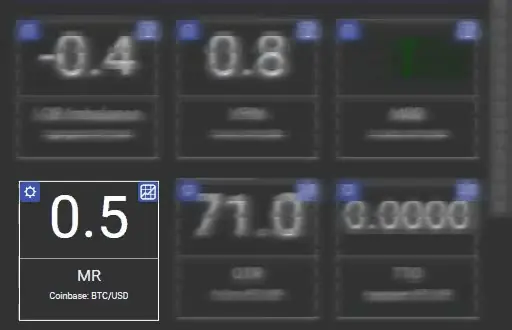
Market Resilience (MR) measures how the order book absorbs and recovers from a large trade. It is descriptive, not predictive: it reports what has already happened to the book, and it carries no directional information.
The score blends four measurements, weighted as shown: 1. Trade Shock Severity (30%): how far above normal the triggering trade was for this instrument. This is a penalty - a larger print lowers the score. 2. Spread Recovery (10%): how quickly the spread returned to normal, judged against this instrument's own recent recovery times. 3. Depth Recovery (50%): how quickly the depleted side of the book climbed back, judged against its own recent history. Liquidity appearing on the untouched side is a price move, not a recovery, and does not count. 4. Spread Shock Magnitude (10%): how far the spread blew out relative to its usual level. Also a penalty.
The score runs from 0 to 1, but the scale is relative to this instrument's own recent behaviour, not an absolute fraction of liquidity restored. A reading of 0.7 means this recovery beat that book's own recent average; it does not mean 70% of the depth came back. Because two components are penalties, a book that absorbs a very large trade perfectly still reads lower than one that absorbs a small trade equally well.
Inferred from aggregated price-level sizes, so a cancelled order cannot be told apart from a filled one, and the reading depends on how many levels your venue publishes.