Topic: #VPIN
Explore 6 technical VisualHFT guides and engineering analyses tagged VPIN, covering live order books and trading infrastructure.
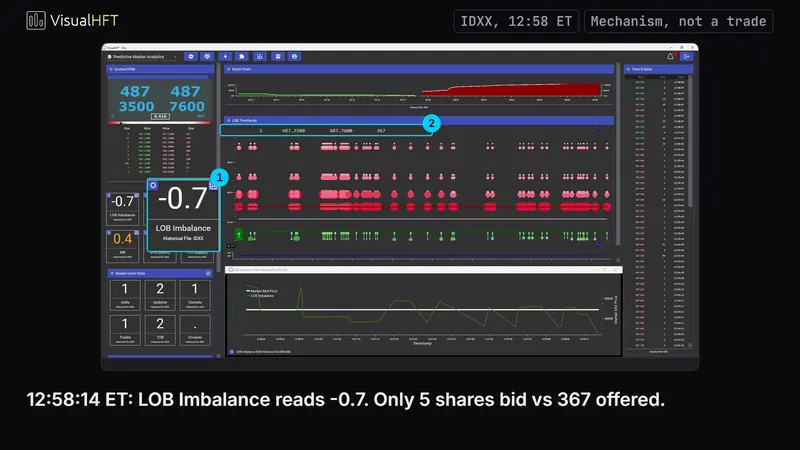
From Signal to Trade, Part 1: Turning Book Imbalance and Toxicity into Desk Rules
Why a 73.9% directional hit rate still loses to the spread when traded alone, how Touch-Weighted LOB Imbalance lifts reversal entries to 78.2%, and how to automate multi-tile alerts in the VisualHFT Trigger Engine.
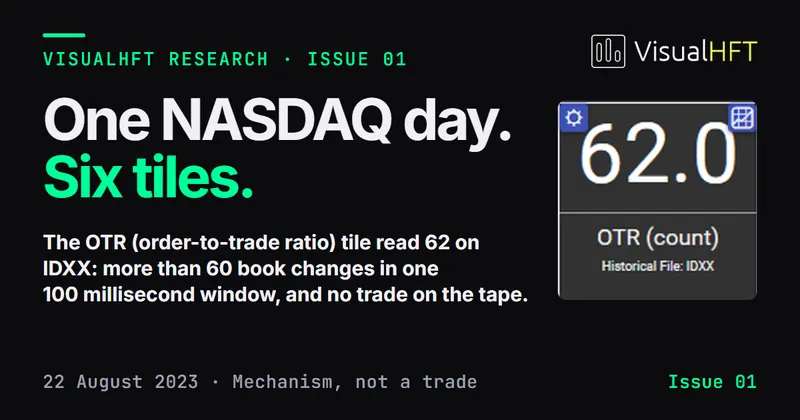
VisualHFT Research, Issue 01: One NASDAQ day, six tiles
Issue 01 of VisualHFT Research, as a PDF: two settings of the LOB Imbalance tile compared on ten liquid NASDAQ symbols, a guide to reading the captures, and a map of the fourteen spreads.
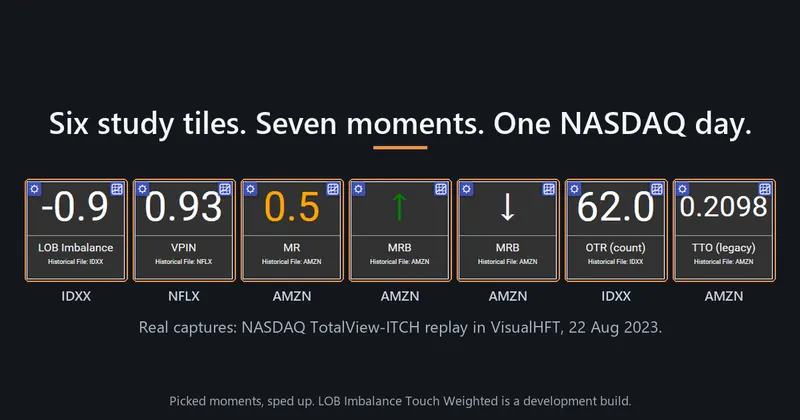
Six Study Tiles, One NASDAQ Day: The Theory, the Screen, and What the Data Supports
We replayed a full NASDAQ TotalView-ITCH trading day through VisualHFT, captured each study tile doing what its research says it should, walked through every pause, and tested each tile against a free rule on symbols held out from the design.
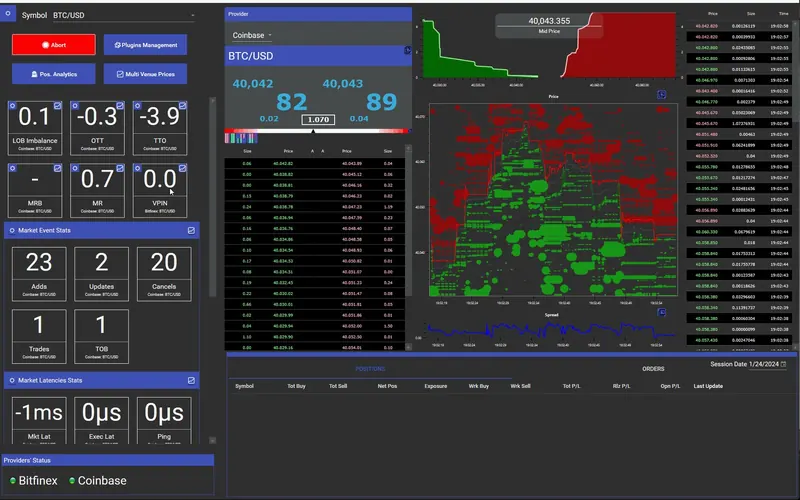
The Six-Signal Microstructure Cascade: How VisualHFT Instruments the Full Second Before the Print
Cancel-side asymmetry, refresh-latency p95 widening, VPIN elevation, multi-level LOB shift, spread widening, then the print. Each signal has a name, a plugin, and a GIF. Here is the full cascade as VisualHFT instruments it in real time.
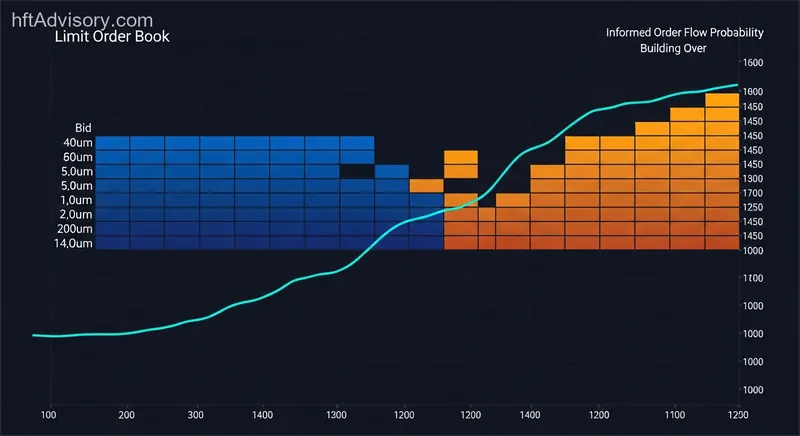
VPIN and Real-Time Order Toxicity: What Your Execution Stack Cannot See Before the Fill
VPIN and LOB imbalance signal informed order flow before the price print moves. Here is why your execution stack is blind to it — and how VisualHFT changes that with real-time, auditable microstructure analytics.
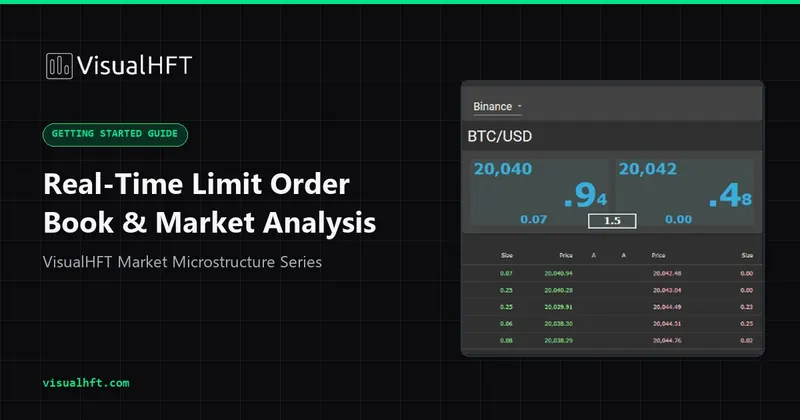
Getting Started with the Open-Source VisualHFT Application
Build the open-source VisualHFT application, connect public market data, inspect its studies, and extend it with the public SDK templates.